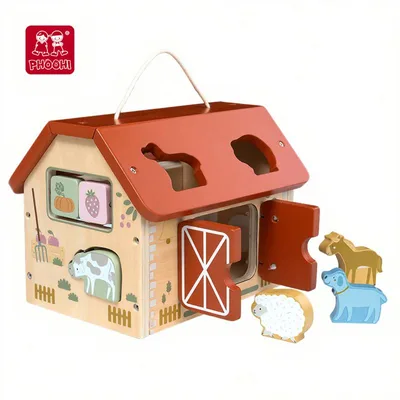
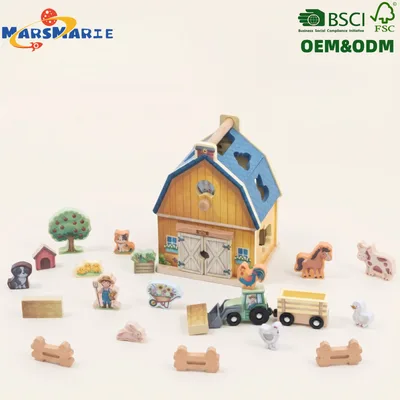
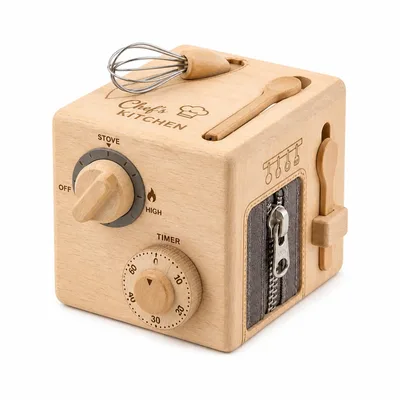
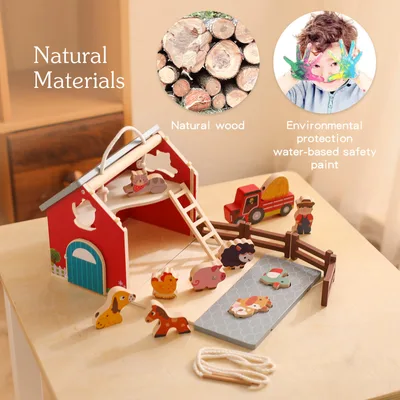
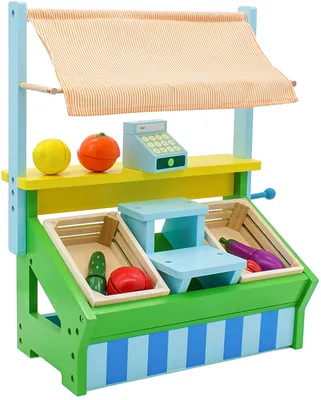
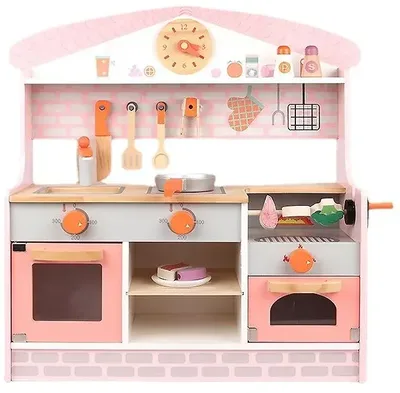
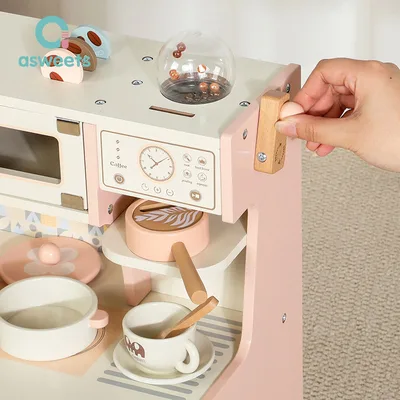
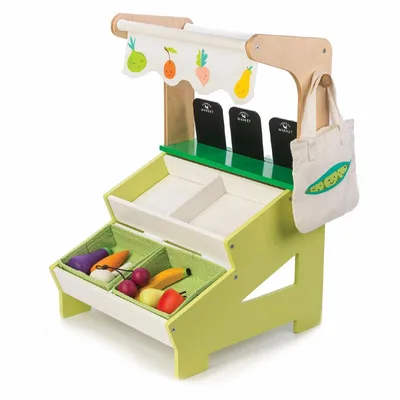
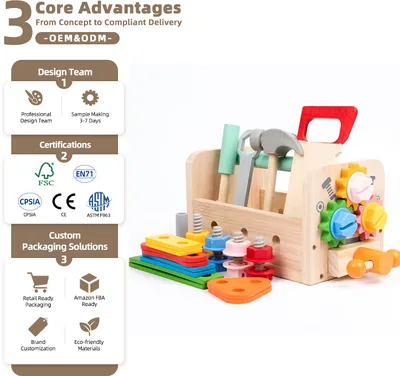
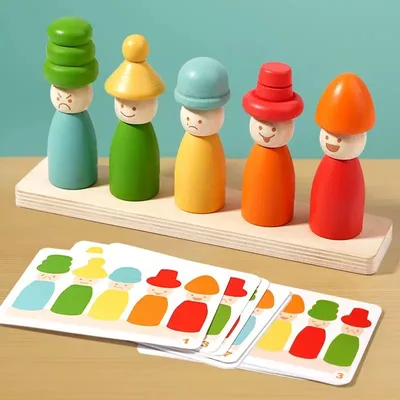
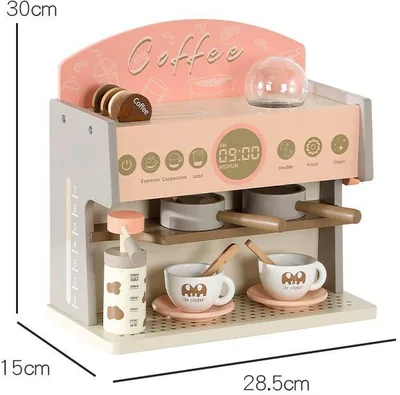
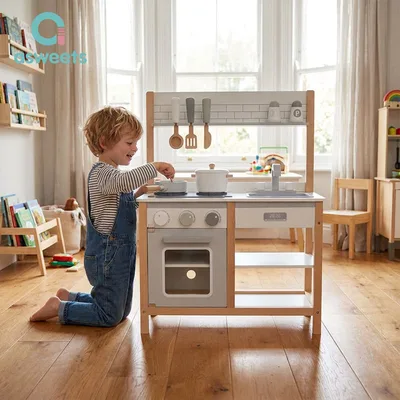
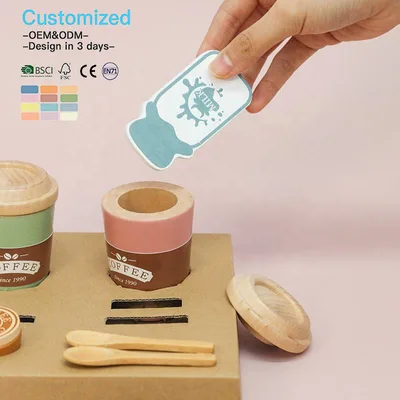
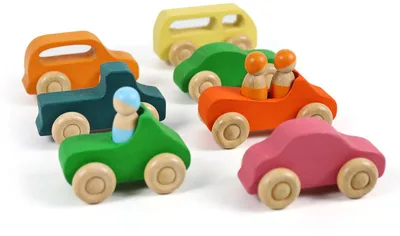
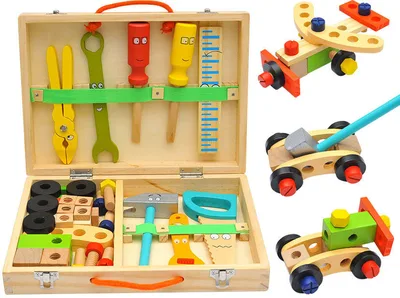
Pretend play carries the most freight risk and the least useful catalogue photos. A play kitchen or a doll's house is compared on substrate, hardware, stability and how a flat pack goes back together.
What buyers order in this category
The range covers play kitchens, doll's houses, market stalls, tool benches, doctor's sets, tea sets, doll furniture and push-along prams. A retailer buys a theme in one or two colourways; a distributor mixes 6–10 styles per pallet; a gift buyer places the bulk in the third quarter for the fourth-quarter season. Confirm per model.
Assembled or flat-packed changes carton volume, damage rate and the labour your customer spends building it; the quotation should say which one it is.
Colourways are new paint runs and new decals, so a colour change is a printing job. Replacement parts are a recurring request: ask before the first order whether hardware and spare handles can be supplied. supplier evaluation sets out how to compare these answers across two suppliers.
How it is made and what to check
Panels are commonly 12, 15 or 18 mm MDF, plywood or pine; MDF edges are banded, painted or left raw. Kitchen and doll's-house bodies are usually flat-packed with cam locks or screws, then glued where the shape allows.
Check the sample by using it: open every door and drawer and look at the gaps, push a loaded drawer and watch the unit creep, and sit a known weight on an open door. A tall unit with a narrow base needs a wall-anchor kit in the box.
Hardware is where the cheap version shows: hinge screws into end grain, cam locks that pull through particle board, screws that stop short of the panel. Draw one screw and look at the thread engagement. For a magnetic door catch, pull-test by hand and confirm the magnet is captive, not glued to the surface.
Decals are the other failure: lift an edge with a fingernail, rub a printed panel with a damp cloth, and ask whether the print is direct or a film.
MOQ, sampling and packing
MOQ is set per style, per colourway and per decal sheet. A stock model commonly starts at 20–100 pcs; a custom colour or decal commonly pushes it to 300–1,000 pcs; a new shape or tooling typically starts at 1,000–3,000 pcs.
Sample rounds are usually two: an assembled sample to sign off shape and hardware, then a flat-pack sample from the production line that you build yourself against the instructions. If the instructions fail you, they will fail your customer; Inspection & AQL shows where that check sits in an inspection plan.
Packing decides the damage rate. Ask for a double-wall carton, foam or corner protectors and a drop test on the packed format; check the hardware bag against the parts list. Carton volume is the cost line here, so flat-pack is often the better freight choice even when assembly costs you time.
How to compare two suppliers in this category
Keep the design constant and compare the parts a photo cannot show. The commonest trap is a sample assembled by a sample maker from hand-fitted parts while the bulk arrives flat-packed with substituted screws. Ask for the hardware spec in writing, and build one carton from the bulk. Writing an AQL inspection plan for a wooden toy order gives you the checkpoints.
- Substrate and edge — MDF, plywood or pine, the thickness, and how every visible edge is sealed.
- Hardware — hinge type, screw length and thread, cam-lock size and magnet retention.
- Stability — base footprint, a loaded-drawer test, and whether an anchor kit is in the box.
- Flat-pack fit — build one from the bulk and check hole alignment, not just the sample.
- Decal or print durability — edge lift, damp-cloth rub, and whether interiors are finished.
- Packing — carton grade, corner protection, and a drop test on the packed format.