Building sets are bought by the kilo as much as the piece. A block half a millimetre out will not stack, and a set too heavy costs more in freight than wood.
What buyers order in this category
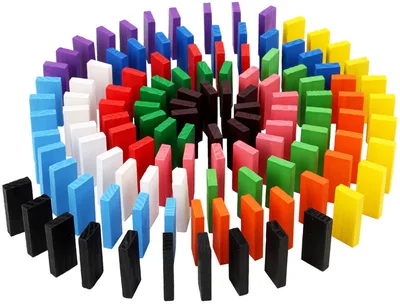
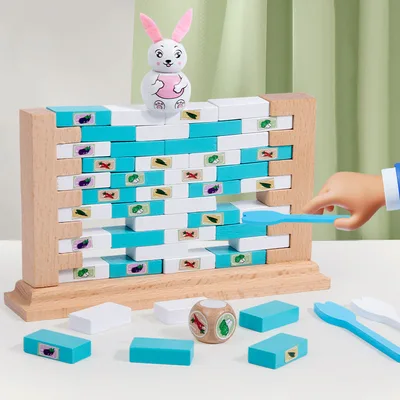
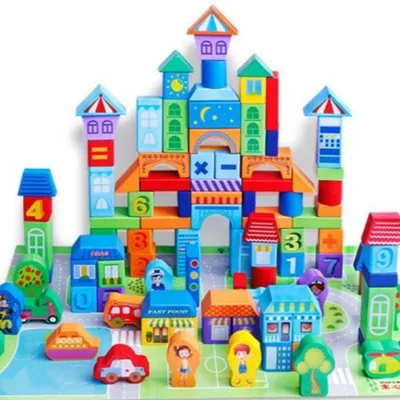
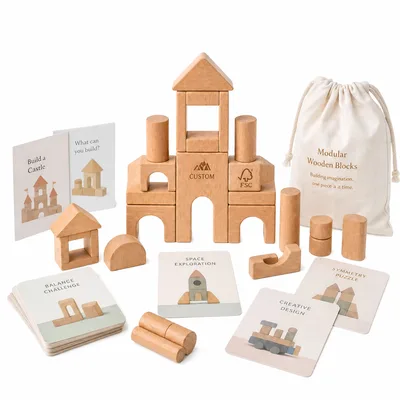
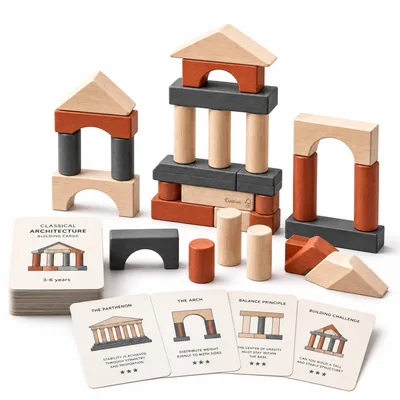
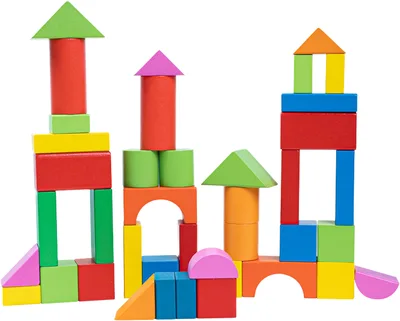
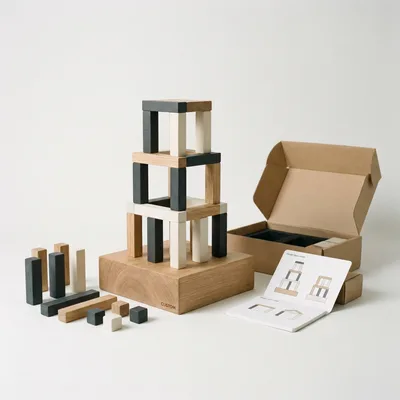
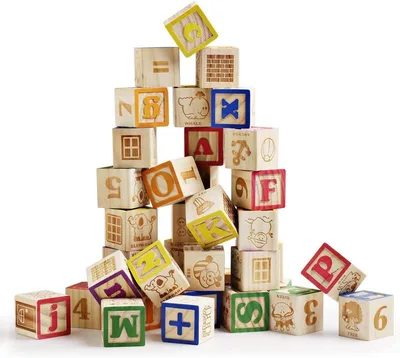
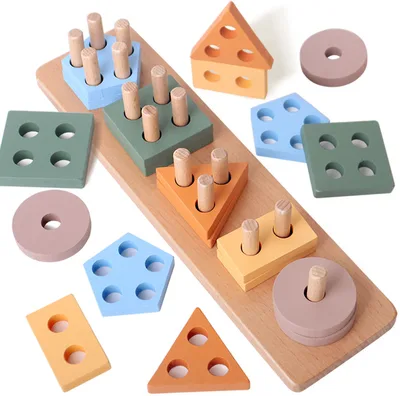
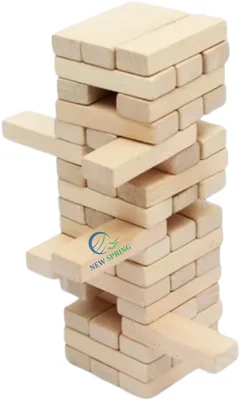
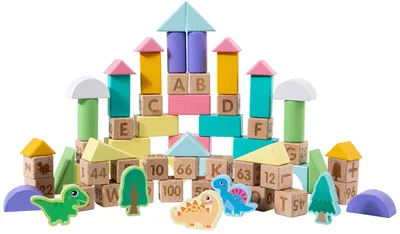
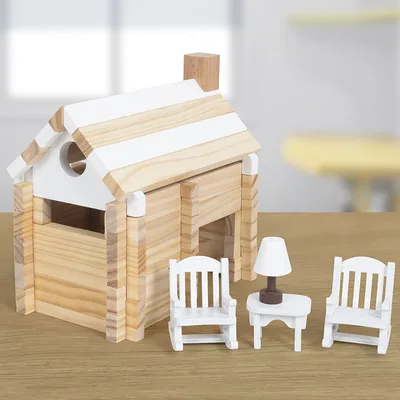
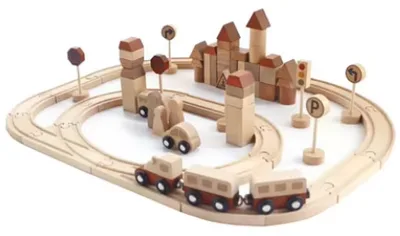
The range covers unit blocks, rainbow stackers, hollow blocks, plank blocks, castle and bridge sets, balance beams, peg-and-dowel sets and wooden marble runs. Nurseries and schools buy large sets, often 100 pieces and up; retail buys 20–50 pieces; a gift buyer wants a boxed set with a design on the lid. Confirm per model.
A 100-piece hardwood set is heavy, so carton weight and the pallet plan matter as much as CBM. Refill packs are the usual reorder: a school that buys a classroom set later buys blocks by the dozen, so ask whether single sizes can be ordered.
Colour is the second variable. Natural, water-based dye and painted sets are three lines; dye colours are matched by a sample chip, not a colour reference number. supplier evaluation covers how to compare those answers.
How it is made and what to check
Blocks are cut from kiln-dried hardwood, planed, sanded and oiled or dyed. Unit blocks follow a 1:2:4 ratio, which works only if every piece is cut to the same tolerance: stack ten 2-unit blocks against one 4-unit block and look for the wobble. The stack test beats a caliper and mirrors how a child uses it.
Check the wood, not only the dimensions. Loose knots become holes; end grain that has not been sanded raises a splinter; a board dried outside the moisture range moves after the container has crossed the equator. Ask for the drying record and the moisture target, commonly 8–12%, and leave a sample in a warm room for a week to check for cupping.
Dye and paint bring their own checks: a damp cloth on a rainbow stacker should not lift colour. On hollow blocks, look at the joints: glue alone is common, glue plus dowel is stronger, and the corners take the drop.
MOQ, sampling and packing
MOQ tracks the set size and the finish. A stock set commonly starts at 20–100 pcs; a custom dye or printed lid pushes it to 300–1,000 pcs; a new shape or tooling typically starts at 1,000–3,000 pcs. Ask early if you plan to sell blocks singly: refill packs follow the set MOQ.
Sampling runs to two rounds: a dimensional sample first, then a full set in the chosen finish. Count the set and check the ratio of sizes; a set short of 4-unit blocks looks fine in a photo and wrong on a nursery floor. Mixed containers explains how block sets combine with lighter SKUs in one container.
Packing has to carry weight. Ask for a double-wall carton, a piece count on the packing list and a drop test on a full carton; hardwood blocks break carton corners before they break themselves.
How to compare two suppliers in this category
Send both sides the same set list and finish, then stack and weigh the samples first. The commonest trap is a set that matches the photo but mixes two board thicknesses, so half the blocks wobble on the other half; ask for the thickness of every size in writing. Planning a mixed container: CBM, carton data and a… covers the freight side.
- Dimensional consistency — the 1:2:4 ratio, checked by stacking and by caliper across ten pieces.
- Species and drying — the species, the moisture target and how boards are stored before cutting.
- Edge and end grain — roundover radius and sanding at the end grain, checked with a fingertip.
- Finish — dye or paint type, and a damp-cloth test on a coloured block.
- Joint strength — glue only or glue and dowel, checked on a hollow block corner.
- Set count and carton weight — pieces per size, carton weight and the pallet plan.