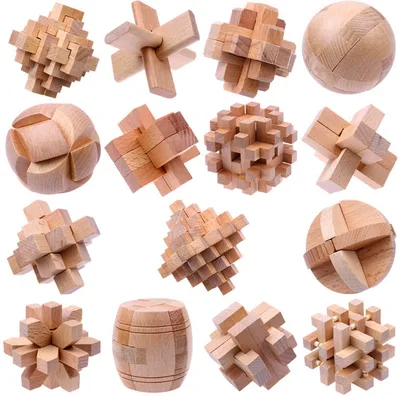
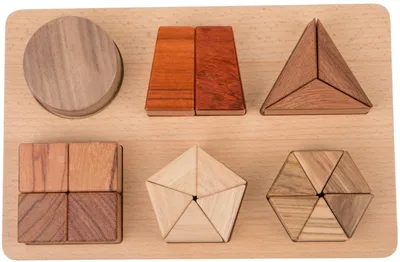
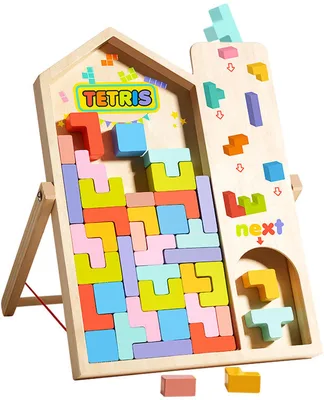
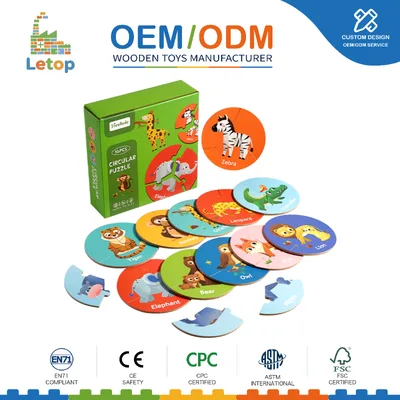
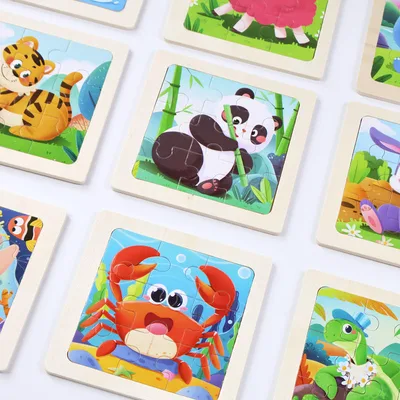
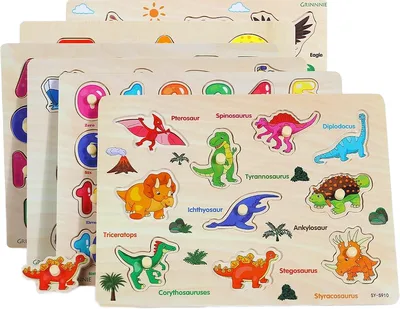
Puzzles are the most repeatable wooden toy to buy and the easiest to get wrong on one detail: a warped board, a chipped tab, or a print that blisters. Buy on board, cut and print.
What buyers order in this category
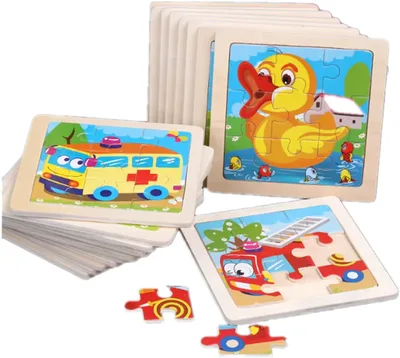
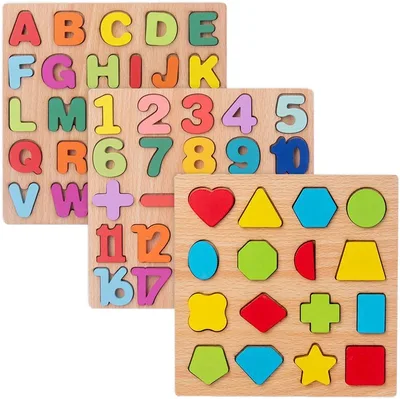
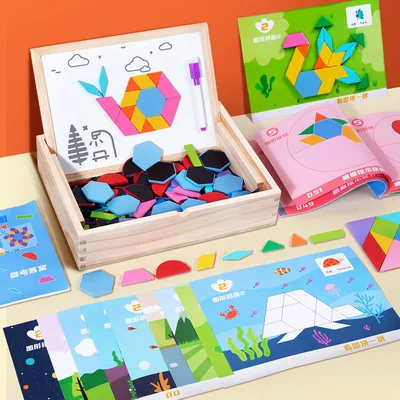
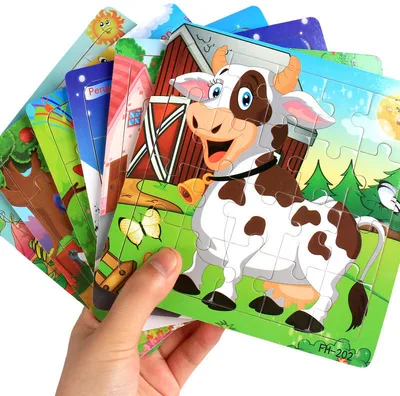
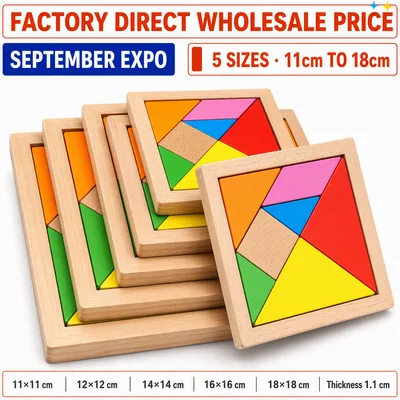
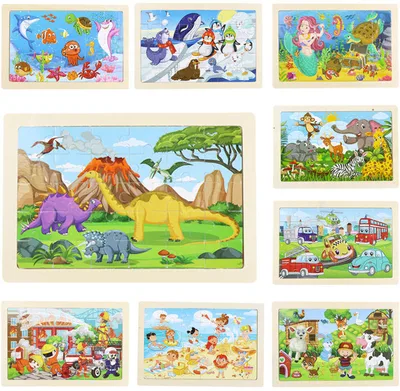
The range covers peg and knob puzzles, chunky first puzzles, jigsaws from 6 to 48 pieces, floor puzzles, layer puzzles, alphabet and number boards, and shapes cut to an outline. Retail buys an image range of 8–12 designs; a gift buyer wants boxed sets; a distributor mixes peg puzzles for the youngest shelf with floor puzzles for the oldest.
First orders follow the print: a stock image commonly starts at 20–100 pcs per design, a custom image or branded box at 300–1,000 pcs, a new die or board size at 1,000–3,000 pcs. Confirm per model.
Reorders are per image, not per range: one design sells and the rest sit, so ask whether one image can be repeated at the lower quantity. supplier evaluation covers how to compare the answers.
How it is made and what to check
Most boards are plywood, commonly 3–9 mm; peg and floor puzzles sit at the thicker end, and MDF is used where the price demands it. The board is printed, then cut on a steel-rule die or a laser.
On a sample, assemble the puzzle three times. A tab that needs force will chip in a child's hand; a piece that falls out when the board is tilted is too loose. Run a finger along the cut edge for burrs, and look for a white line where print meets cut.
Print is the second failure. Check whether the image is printed direct on the board or on paper mounted to it, because mounted paper blisters at the edge after a humid container. Look at the underside as well as the face.
Warp: lay the board flat, press opposite corners, then leave a sample in a warm room for a week. Ask for the moisture target, commonly 8–12%. For peg puzzles, pull each peg and check how it is fixed.
MOQ, sampling and packing
MOQ tracks the design, the box and the die. Stock designs commonly start at 20–100 pcs; a custom image or box pushes it to 300–1,000 pcs; a new die typically starts at 1,000–3,000 pcs. A second image on the same die is a print change, not tooling.
Sampling runs to two rounds: board and print first, then a production sample from the chosen die and print run. Assemble the physical sample yourself; MOQ & price bands explains how die and print quantities interact.
Packing matters: a thin board in shrink wrap is damaged at the corner, and a box needs a board grade that survives the pallet. Ask for the piece count on the packing list, a barcode and a carton for a drop test. The price structure of a wooden toy: material… shows where board, print and packing sit in the cost.
How to compare two suppliers in this category
Set the same image file, board size and piece count for both sides, then judge the cut and print, in that order. The commonest trap is a sample cut on a fresh die while the bulk runs on a die near end of life, so tabs chip and pieces stop locking. Ask how many impressions a die runs.
- Board substrate and thickness — plywood or MDF, thickness in millimetres, edge finish.
- Cut method and die life — steel-rule die or laser, burrs, and the die replacement rule.
- Print method — direct print or mounted paper, the ink system, the underside.
- Piece fit — assemble three times, tilt the board, shake it gently.
- Moisture and warp — the moisture target and a week in a warm room, board on edge.
- Packing and count — box board grade, piece count, barcode, shrink wrap.