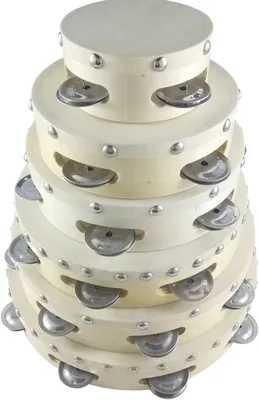
Musical instruments are the one wooden toy category where a buyer can hear the defect. Tuning, glue joints and bar mounting separate a playable set from a box of sticks.
What buyers order in this category
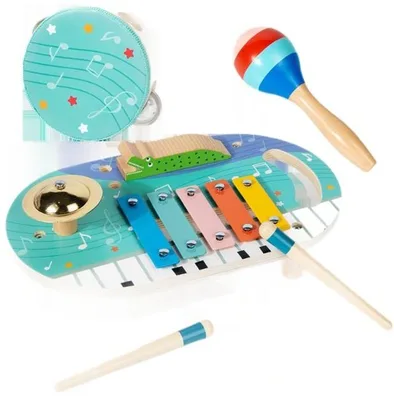
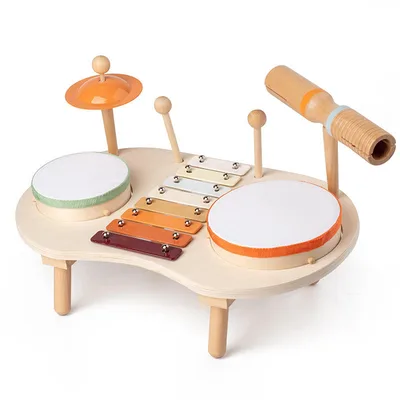
The range covers xylophones and glockenspiels, tambourines, hand drums, castanets, rhythm sticks, maracas, rain sticks and bell frames. A nursery or music service buys 6–12 units of one instrument; a retailer buys four to eight styles; a gift buyer wants a boxed set with mallets. Confirm per model.
The scale is part of the specification. A pentatonic set and a diatonic set are different products, and a supplier that quotes "xylophone" without naming the scale has not quoted the same thing. Ask which notes the set carries and how the bars are tuned, by cutting or by ear.
Reorders follow replacement: mallets break and bars go missing, so ask whether mallets and bars can be supplied from the same tooling later. supplier evaluation covers how to compare the answers.
How it is made and what to check
Bars are cut from straight-grained hardwood, sanded and mounted on a frame by cord, pin or rubber strip; drums are built from staves or a bent shell; tambourines and castanets are frames with metal or wooden parts. The wood must be dry and straight, because a bar that warps loses its note.
Play the sample before you look at it. Run a mallet along the scale and listen for a dead or buzzing bar; a loose mounting shows as a rattle, not a wrong note. Check every bar for the same thickness and clean end grain, and look at the finish: paint on the striking surface changes the sound, and a drip on the cord is a rushed finish.
Glue joints decide life. Look at drum shell seams and frame corners for gaps or squeeze-out, and tap the joint with a fingernail; a drum that sounds hollow is usually a dry joint. Pull the mallet head and check the stick; castanet handles need the same pull test.
MOQ, sampling and packing
MOQ tracks the style, the scale and the box. A stock instrument commonly starts at 20–100 pcs; a custom print or box pushes it to 300–1,000 pcs; a new frame or tooling typically starts at 1,000–3,000 pcs. A different scale is a different bar set, so ask whether it runs on the same frame.
Sampling runs to two rounds: the instrument and its tuning first, then a production sample with mallets and packaging. Play the second sample too; Sampling explains what a sample round should produce.
Packing protects sound as much as looks. Bars knock against each other in transit, so ask for dividers or foam and mallets packed separately, plus the carton count and a drop test. How to read and verify EN 71 and ASTM F963 test reports helps with the report pages for the finish and metal parts.
How to compare two suppliers in this category
Set the same scale, frame size and mallet for both sides, then play each sample with a tuner. The commonest trap is a sample tuned by hand while the bulk bars come off a jig that has drifted, so the set is a quarter-tone out by the time it ships. Ask how tuning is checked per batch. Hold constant and ask about:
- Scale and tuning — which notes, the tuning method, and whether a check is recorded per batch.
- Bar material and mounting — species, thickness, and cord, pin or rubber mounting.
- Glue joints — shell seams and frame corners, checked by eye and by tap.
- Finish — the coating system, and whether the striking surface or cord carries finish.
- Mallets and small parts — head fixing, stick length, and pull-tested handles.
- Packing — dividers, foam, separate mallet packing and the drop test.